The wedding seating chart ideas worth building are the ones designed for a real room, not a mood board. A display sturdy enough to survive a crowded entrance. A table layout that matches your actual headcount instead of twelve identical rounds copied from a photo. A naming scheme a stranger can map back to a table number in one glance. Acrylic and mirror boards outlast paper propped on an easel. A sweetheart table ends the head-table argument in a single decision. Mixed rounds and rectangles solve an odd guest count a uniform layout cannot. Travel-city or love-song table names feel personal, but only when every place card still shows the number. Below: the display formats worth building, the layout archetypes that cover most venues, the naming systems that survive a live wedding, and the timing mistake that turns a display into a reprint.
Display and Signage Ideas
Five formats show up again and again at real weddings, for reasons that have nothing to do with trends.
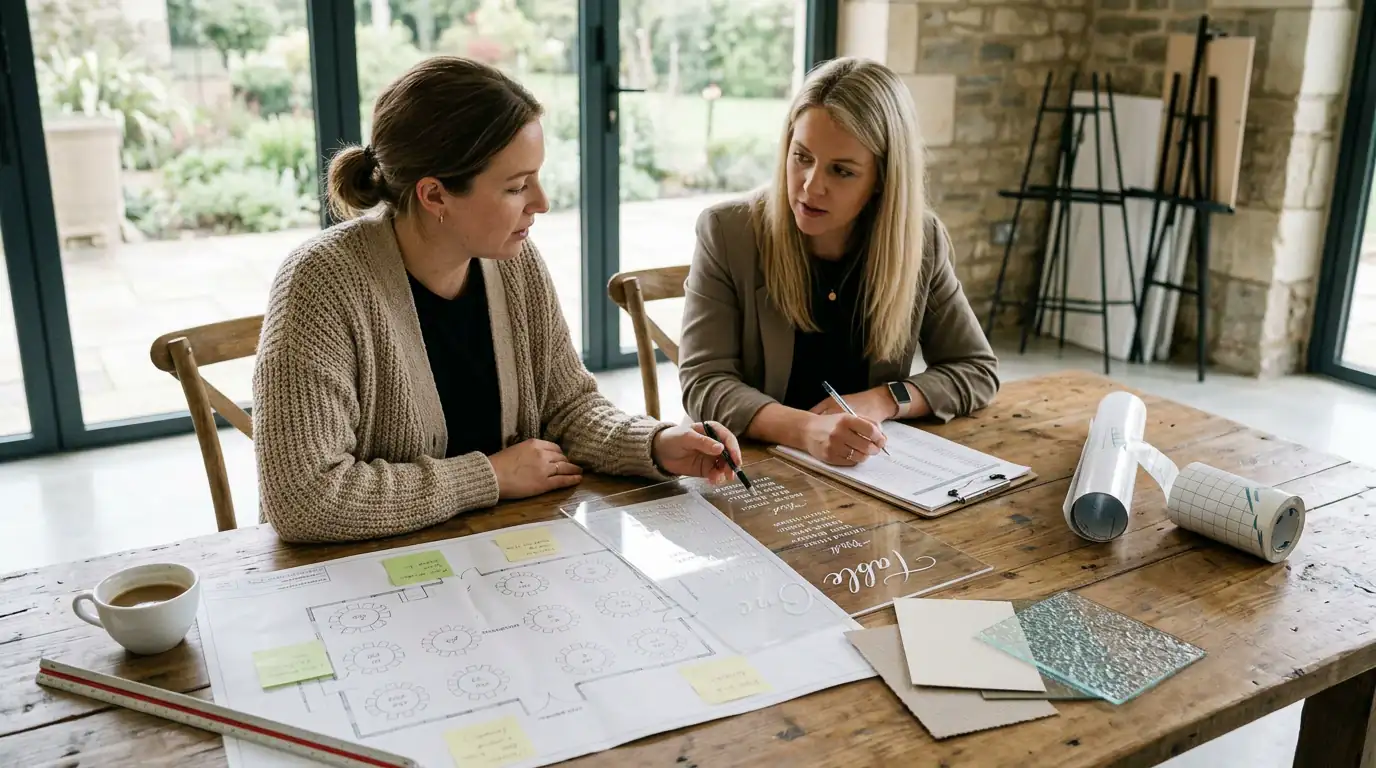
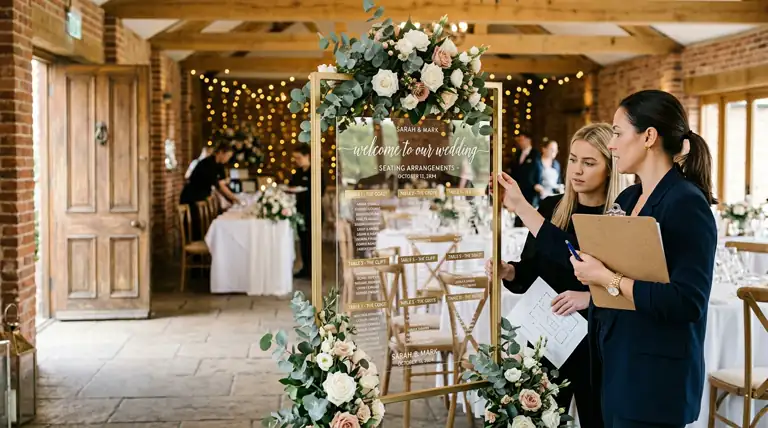
Acrylic seating chart. A sheet of clear acrylic with names vinyl-lettered or printed directly on the surface. It reads as clean and modern from ten feet away, and it survives a gust of wind that would flatten a foam-core sign propped against an easel. The trade-off is fingerprints and dust. Acrylic shows every smudge under venue lighting, so someone needs to wipe it down thirty minutes before doors open, and again if it sits near a bar or a buffet line. Weight the base or lean it against something solid; a freestanding sheet of acrylic in a doorway is one gust away from the floor.
Mirror seating chart. Names written in chalk marker or vinyl on a mirror, usually vintage or gold-framed and rented rather than bought. It photographs beautifully because it reflects the room around it, which is also its weakness: bad venue lighting turns a mirror board into a glare problem, and a mirror propped near a window can be unreadable by mid-afternoon. Ask to see the entrance lighting at the actual hour of your cocktail hour before committing to this one. A walkthrough at 11am tells you nothing about a 5pm glare angle.
Champagne wall. Guests find their name on a card tucked into a slot in a wall of champagne flutes and pull their own glass as a welcome drink. It doubles as the seating display and the first pour, which guests notice and remember more than a static sign. It needs a flat, stable surface, real setup time, and someone restocking flutes as they empty, not a five-minute job, and not one you want a stressed coordinator improvising an hour before doors.
Wax-sealed escort cards. Individual cards, one per guest, closed with a wax seal in a color that matches the palette. They read as formal and tactile, and guests keep them as a small souvenir long after the wedding. The cost scales with guest count in a way a single sign does not: a wax seal is a per-card expense and a per-card assembly step, not a one-time purchase you set down once and forget.
Polaroid escort cards. Instant-film-style photos of the couple, or of each guest paired with their table number, clipped to a display board or strung on twine across a doorway. It is the warmest, least formal option on this list, and it is also the one most likely to feel out of place at a black-tie reception. Match the format to the dress code as much as the color palette: a polaroid wall at a ballroom wedding can read as a mismatch no amount of good lighting fixes.
I like the acrylic board for most venues: it holds up outdoors and indoors, and it is the easiest of the five to read from a distance in a crowd, which matters more than any of them once fifty guests are milling near the entrance at once. The wax-sealed cards are the one I would skip for a guest count over 150; individually sealing that many cards is a real time cost the week of the wedding, not a design decision, and it is the kind of task that quietly eats an entire evening.
Whatever format you choose, the display is downstream of the layout. Settle the tables first.
Table Layout Archetypes
Try SeatCanvas — Free
Build your seating chart visually. Import guests, drag to tables, export a print-ready PDF.
Start Planning Free →Three layout decisions cover most of what a venue floor plan actually has to solve, and each one is a real trade-off, not a style preference to browse through.

Sweetheart table versus head table. A sweetheart table seats just the couple, facing the room, with the wedding party seated at their own tables nearby. A head table seats the couple with the full wedding party in a line facing the guests, the way most receptions looked a generation ago. The sweetheart table photographs better and guarantees the couple actually talks to each other during dinner instead of down a long table past six other people. The head table keeps the wedding party together and skips an extra decision about where they sit, but it also means six or eight extra people staring out at the room instead of eating a relaxed meal with their own dates. Pick the head table if your wedding party is close and wants to be seated together; pick the sweetheart table if you want five minutes of the night that belongs only to the two of you.
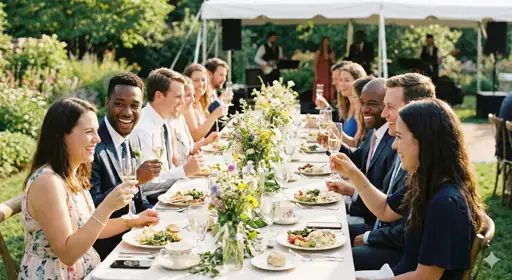
Banquet runs versus rounds. Long banquet tables set end to end create a communal, family-style room that photographs dramatically in a barn or an industrial space with exposed beams. Round tables of eight or ten encourage conversation because everyone faces the center, and they are easier to space evenly in an irregular room than a single long run. The honest trade-off: banquet runs only let guests talk to the people directly across and beside them, while rounds require more total floor space for the same number of seats. A room with a long, narrow footprint favors banquet runs; a wide, square room favors rounds, and most venues are closer to one shape than the other once you actually measure them.
Courtyard and tent arrangements. Outdoor courtyards and tents rarely hand you a rectangular grid to work with: there are support poles, uneven ground, and sightlines to a fixed feature like a fountain or a fire pit that nobody wants blocked. The trade-off here is flexibility against structure: a tent lets you place tables around the terrain instead of a fixed room shape, but every pole and guy-wire anchor becomes a spot you cannot put a table anywhere near. Walk the space with the actual tent company’s pole plan before you finalize which tables go where, not a generic floor plan template pulled off the internet, which will not match your specific tent size or your specific yard.
None of these three decisions gets finalized from a photo of someone else’s wedding. They depend on your venue’s real dimensions, your wedding party size, and whether you are indoors or under canvas with the ground itself working against you.
Creative Table Naming Ideas
Numbered tables are the safe default because they need no explanation at all. Named tables take more setup but add a layer of personality that a plain number cannot. Three sources cover most of what couples actually use.
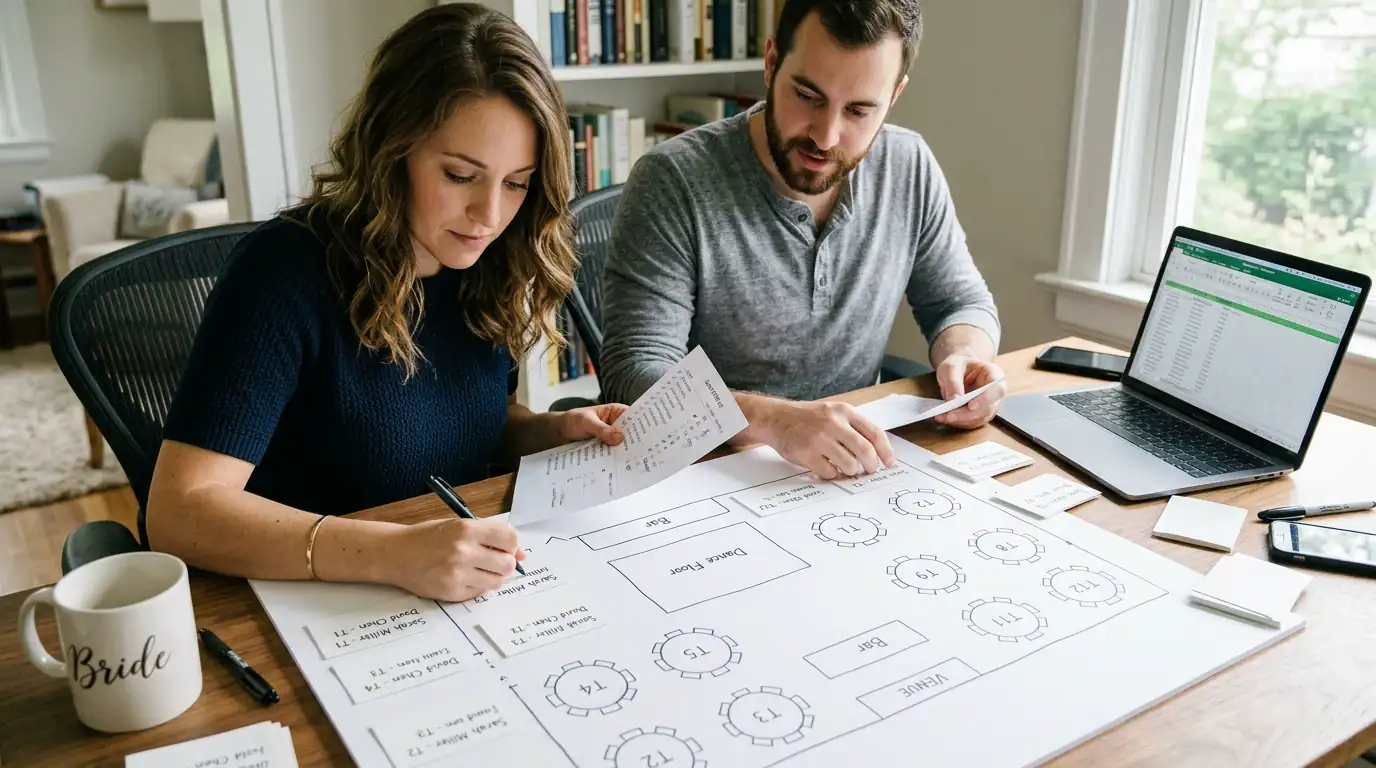
Travel spots. Cities or countries the couple has visited together (Rome, Kyoto, Lisbon) printed on a small sign at each table, often with a short line about why that place matters to the two of you. It gives guests something to talk about at a table full of near-strangers, which numbered tables never do on their own. It also hands you a built-in decor theme if you want small props, postcards, or photos from each trip to match the sign.
Songs. A meaningful song per table (first dance, a song from the wedding party’s playlist, a song that was playing during the proposal) printed as the table name with the artist underneath. It works especially well for couples who met through music or share a favorite genre, and it doubles as conversation-starter trivia during dinner once someone at the table recognizes the reference.
Dates. Significant dates in the relationship (the day you met, the day of the proposal, an anniversary that matters only to the two of you) spelled out as the table name instead of a number. It reads as sentimental without needing extra decor, since the date itself is the content, and it costs nothing beyond the printing.
Here is the failure mode nobody mentions when they suggest this: a naming scheme only works if guests can find their seat without a scavenger hunt through fifteen unfamiliar city names. If “Kyoto” and “Lisbon” mean nothing to your great-aunt, she needs a printed seating chart that maps every guest name to every table name: the display from the section above, separate from the individual table signs. A cute naming scheme without that master chart turns a nice idea into forty confused guests standing near the entrance asking each other where table “Lisbon” is. Keep the numbers on the table too, in smaller print under the name, so both systems work at once and nobody is stuck guessing.
The Bridge to Planning
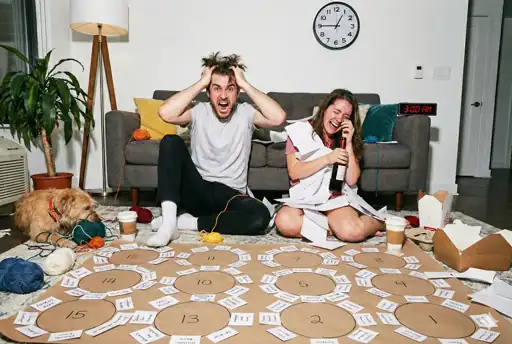
Here is the timing problem that catches almost everyone: a display or a set of named table signs needs a final guest-to-table assignment before a calligrapher or a print shop can start production. Order acrylic lettering, wax-sealed cards, or printed table names before your roster is locked, and a single swapped guest means a reprint: sometimes a rush reprint, at a rush price, the week of the wedding when you have the least time and patience for it.
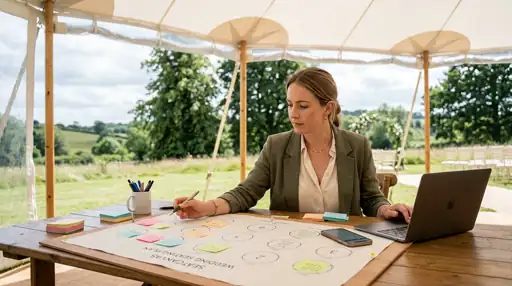
The fix is sequencing, not more decisiveness. Settle your layout archetype and your naming scheme first, using the sections above. Then finalize who sits where using a tool built for moving people around without redrawing anything by hand: a wedding seating chart maker lets you drag guests between tables and see the whole room update instantly, so you can hold off ordering signage until the assignment is actually final. SeatCanvas is built around round and rectangular tables with adjustable seat counts, which covers both layout archetypes from the section above without forcing you into one fixed template.
Lock the roster first. Then order the acrylic, the wax seals, or the printed names, never the other way around. Reverse that order and you are paying for a reprint instead of a party. If you have not started the layout itself yet, build your layout free before you commit to any display format above.
FAQ
What is the best wedding seating chart display?
There is no single best format: it depends on the venue and the weather. Acrylic boards hold up best outdoors and in bright rooms; mirrors photograph beautifully but need controlled lighting; a champagne wall works only where there is a flat surface and someone to restock it. Pick based on your actual venue conditions, not what looked best in a photo online.
Should guests be assigned to a seat or just a table?
Assign guests to a table, not a specific chair, unless you have a strong reason otherwise. Table assignments solve the real problem (who sits with whom) without forcing an exact seat order that most guests will ignore anyway once they arrive and start talking to whoever is nearby.
How do you name wedding tables without confusing guests?
Keep the table number printed in smaller text under the name, on both the master display and the individual table signs. A travel city or a song title means nothing to a guest who does not know the couple well, and the number is what actually gets them to the right seat when the name alone does not.
Is a sweetheart table better than a head table?
Neither is objectively better: they solve different problems. A sweetheart table gives the couple a few minutes alone during dinner and tends to photograph well against a backdrop. A head table keeps the wedding party seated together and removes one seating decision entirely. Choose based on whether your wedding party wants to sit together or would rather join their own dates at their own tables.
When should you order the seating chart sign?
Only after your guest list and table assignments are final, not before. Acrylic lettering, wax-sealed cards, and printed table names are all built from a locked roster, and none of them can be produced from a guest list still in flux. Ordering earlier to save time almost always costs more later in a rush reprint.
✦ Google Preferred Source
Want to see more SeatCanvas stories on Google?
You can ask Google to show SeatCanvas more often in your own Top Stories and supported Google experiences. This personalizes your account; it does not raise SeatCanvas for everyone.
Google's control loads only after you choose Continue with Google.