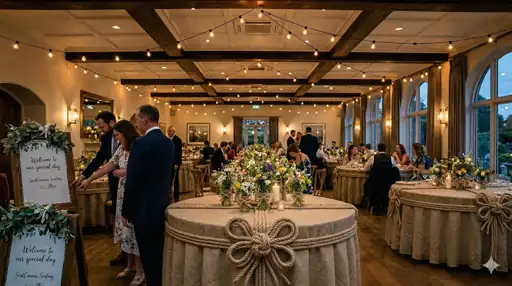
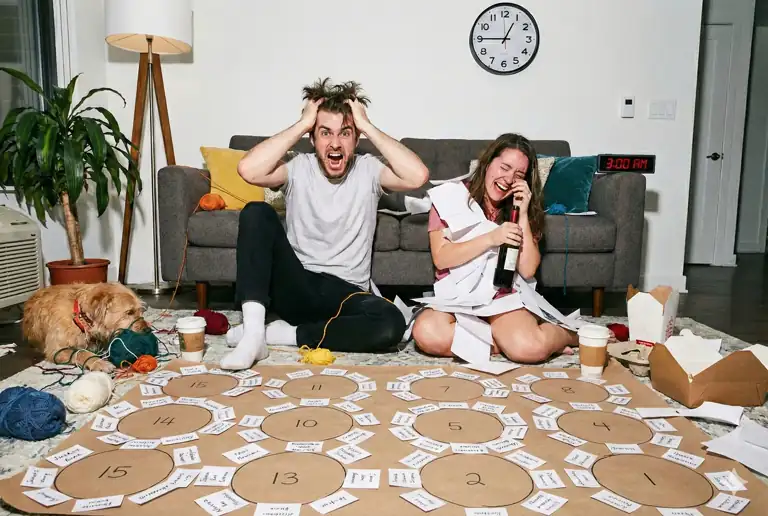
Let’s be honest.
The seating chart is where wedding planning gets personal.
It stops being about flowers and playlists. Suddenly, it’s divorced parents. Ex-best friends. That one cousin who can’t sit near your uncle. You are no longer planning a party. You are negotiating a peace treaty.
If you are staring at a guest list and feeling a low-grade panic, stop. This guide walks you through creating a wedding seating chart calmly. Strategically. With zero unnecessary drama.
Step 1: Start with a “good enough” guest list
You don’t need 100% of your RSVPs to begin. You just need a list you trust most of the time. Waiting for perfection means you end up building the chart under pressure. That is exactly when the process turns into a fight.
Do a fast cleanup pass. Confirm who is basically in. Lock couples who must sit together. Make a note of anyone with a history of tension. You don’t need a novel about family baggage. A simple “avoid sitting near” note works. This tiny step saves you from tearing the whole thing down later.
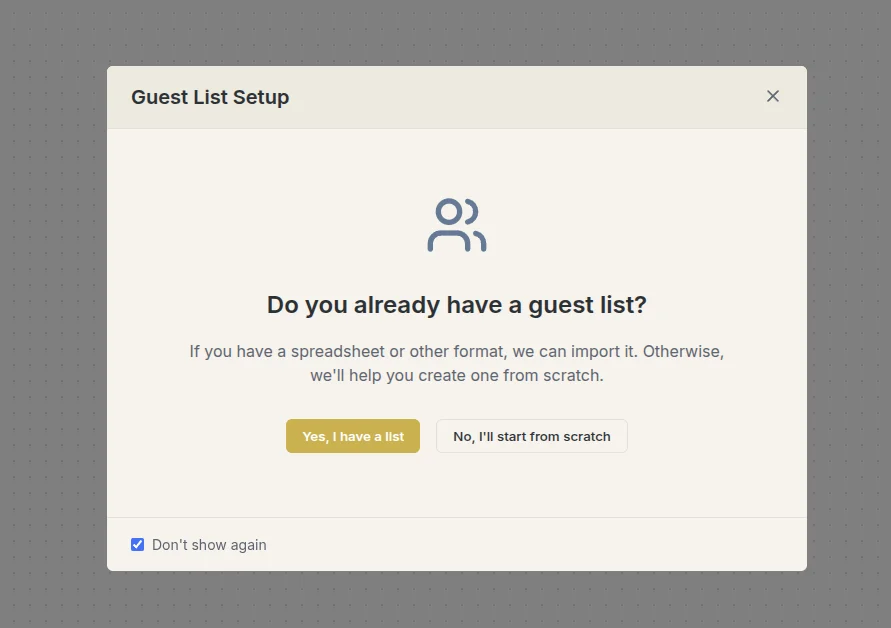
If you handle RSVPs through The Knot, export your guest list and bring it into a visual planner. Cut the manual data entry.
Step 2: Get the room facts first
Try SeatCanvas — Free
Build your seating chart visually. Import guests, drag to tables, export a print-ready PDF.
Start Planning Free →A seating chart implies people. In reality, it is mostly geometry. The venue layout decides where tables go, what fits comfortably, and where guests naturally gather.
Ask your venue for the floor plan and table details. Keep it practical:
- Table shapes (round vs rectangular)
- Comfortable seats per table (ignore the maximum “if we squeeze” number)
- Fixed zones (dance floor, DJ, entrances, bar)
Once you grab this data, you stop guessing. The seating chart stops feeling like chaos and starts feeling like a puzzle with actual edges. Skip the paper. Build your floor plan digitally with a drag & drop layout builder.
Step 3: Place the fixed points early
Most couples freeze because they try to solve the entire room at once. Don’t. Place the fixed pieces first. Let everything else fall into place around them.
Your fixed points are your table choice (sweetheart or head table) and where immediate family sits. This isn’t about arbitrary rules. These choices dictate how the rest of the room flows. They drastically reduce your later decisions.
Keep this light. The goal isn’t lockdown. The goal is a stable base.
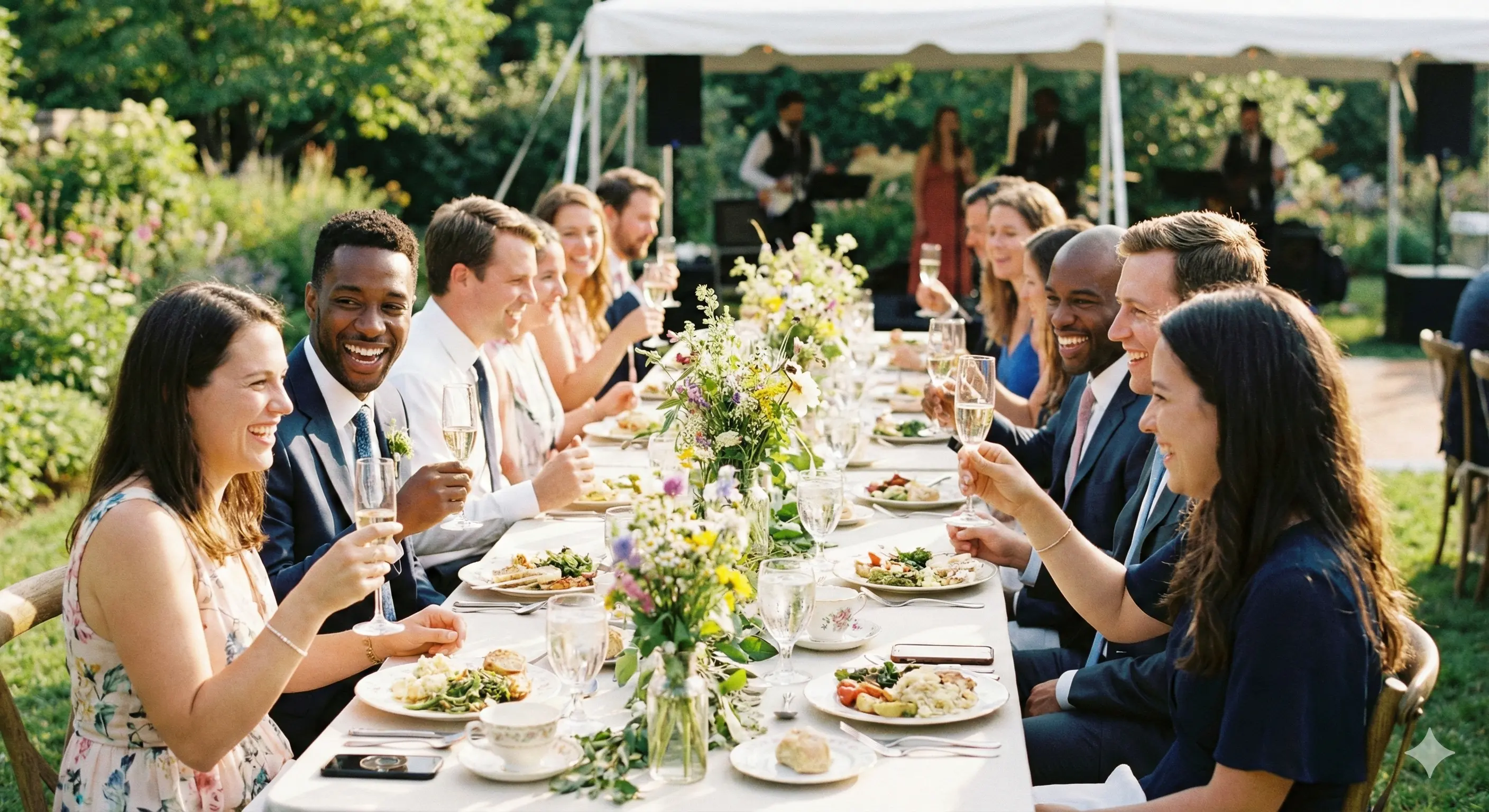
Step 4: Think in groups
This is the shift that makes seating charts organic.
Stop staring at 120 individuals. Stop trying to assign single seats. Zoom out. Ask: what groups naturally exist?
Usually it looks like this:
- Your family
- Their family
- Your friends
- Their friends
- Coworkers and mixed guests
Once you see the groups, the panic fades. If you hold your list in a spreadsheet, import your guest list as a CSV. Keep those family clusters intact automatically. You can even use AI to pre-sort your groups before placing them. You’re placing clusters now, not individuals. Clusters are easy to move. They don’t trigger domino effects.
The Secret Geometry: Choosing Table Shapes
Most couples default to round tables without a second thought. That is a mistake. Table shape dictates the entire social dynamic of the room. You have options. Use them strategically.
The Classic Round Table The standard for a reason. Usually 60 or 72 inches. They encourage conversation because everyone faces the center. Round tables are excellent for mixed groups who need to introduce themselves. The downside? If the centerpiece is too tall, the table splits in half. Keep florals low.
The Rectangular Banquet Table Banquet tables create a family-style, communal dining experience. They look fantastic in long lines, especially in modern or industrial venues. The reality? Guests only speak to the people directly across from them and immediately next to them. If you use banquet tables, group loud, highly social friends here. They will handle the localized conversation zones naturally.
The Square Table A highly underrated move. Square tables feel modern. They provide massive surface area for elaborate centerpieces without killing line-of-sight. They fit exactly eight people, creating an intimate, dinner-party aesthetic. Use these when you want the room to feel less like a banquet hall and more like a high-end restaurant.
Mixing and Matching There is no law demanding uniform tables. Mixing rounds with rectangles breaks up a boring room. Put your family at a long, dramatic King’s table in the center. Use rounds for the rest of the room. It solves awkward guest counts instantly. If you have a group of ten and a group of six, mix the shapes to fit the groups instead of splitting friends apart.
Step 5: Build tables around comfort
A seating chart turns stressful when you try to make it “fair.”
Equal isn’t the goal. Comfortable is.
Some people sit anywhere and thrive. Some people require a buffer. Some need familiar faces. The best tables blend a natural mix. A couple of talkers. A few calm listeners. Enough shared context that conversation survives the salads.
If you catch yourself worrying someone will feel “ranked” by their placement, pause. Guests forget table numbers. They remember how the table felt. Aim for a relaxed vibe. Mathematics do not apply here.
Step 6: Do a vibe check
Once you place your groups, scan the room.
Look for the “leftover” table. A quick fix saves the night. Mix in a warm couple. Move a highly social anchor person there. One adjustment completely changes the tone for eight people.
Plan for changes. Someone will cancel. Someone will surprise you with a plus-one. This doesn’t mean your chart failed. It means weddings are live events. Keep one or two flexible seats open. Sudden changes stop feeling like emergencies.
Keep the energy easy. Perfection is a myth.
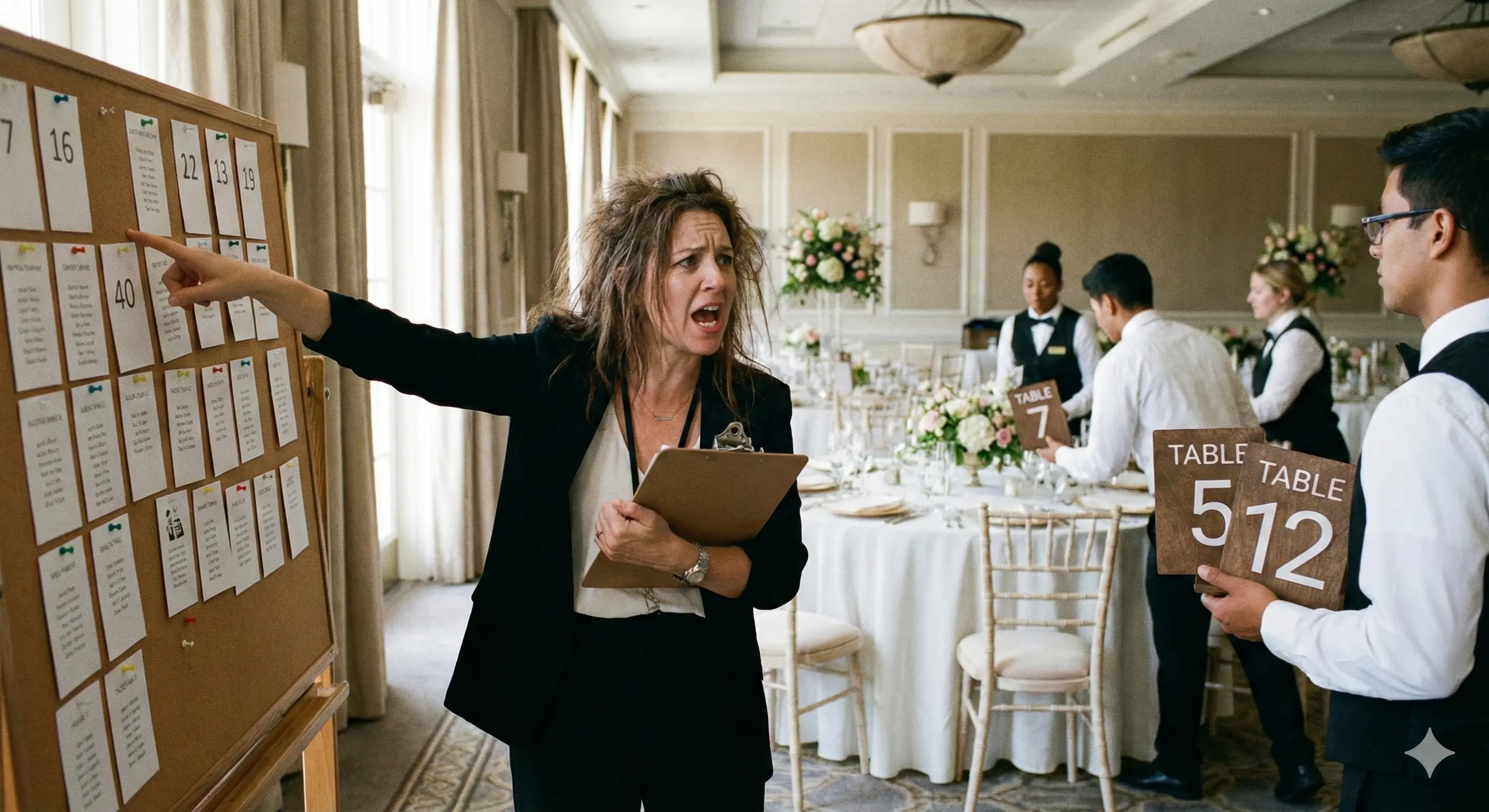
Common Wedding Seating Chart Mistakes
People actively sabotage their own sanity doing this. Avoid the obvious traps.
Waiting for the final week. Everything feels heavy under a deadline. Do the bulk of the work a month out. Let the last week be for minor tweaks only. If you wait, you rush. Rushing breeds terrible decisions.
Treating the layout like a math equation. Human beings are not variables. Grouping people by algorithm instead of personality leads to dead tables. Prioritize comfort over perfect numerical distribution. If a table of nine has better chemistry than a rigid table of eight, go with nine.
The literal random table. Dropping all unconnected guests at Table 14 is lazy. Find a connective thread. Shared ages, similar professions, or just matching them with your friendliest cousins. Give them a fighting chance at a good time.
Maxing out table capacity. Venues tell you a 60-inch round holds ten. It doesn’t. It holds eight comfortably. Ten means elbows touching. Ten means awkward plate passing. If budget and space allow, drop the count. Your guests will thank you.
Hoping tension solves itself. If two people historically hate each other, a wedding will not heal them. Deny the urge to ignore it. Seat them across the room. Face them away from each other.
When Should You Finalize Your Seating Chart?
Lock it down 2–3 weeks before the wedding.
That window hits the sweet spot. Early enough to avoid panic. Close enough that the RSVP list is mostly hardened. It gives you buffer time to export a print-ready PDF for the venue. You handle the final shuffle without a stress headache.
Frequently Asked Questions
Where should divorced parents sit? Whatever keeps the peace. If they get along, seat them at the same table. If they don’t, give them separate tables of equal status. Front row, opposite sides of the room. Do not force a reunion.
Do we actually need a seating chart? Yes. “Open seating” sounds breezy but plays out like middle school cafeteria chaos. People split up, couples search for seats, and your introverted guests panic. Pick their tables. Leave individual seats open if you want a casual vibe. Assigned tables are mandatory. Assigned seats are optional.
How do we seat the wedding party? You have three real options. The classic Head Table (you and the party staring at the room). The Sweetheart Table (just the two of you, party sits elsewhere). The King’s Table (you, the party, and their dates all sitting together). The Sweetheart Table is currently the favorite. It guarantees you actually speak to your spouse.
What if a guest RSVPs ‘no’ but shows up anyway? It happens. Set your seating chart with one “buffer” table in the back of the venue, or keep two empty chairs at tables with easygoing friends. Do not panic when they walk in. Point them to the buffer seats and let the venue staff handle the extra plate. Your job is to get married. Not to act as a bouncer.
Who sits at the parent tables? Tradition says grandparents, siblings not in the wedding party, and very close family friends. Reality says: whoever makes your parents happiest. If your mom wants to sit with her three college roommates instead of your dad’s aloof cousins, let her. Parent tables are an easy win. Let them dictate their own geometry.
The Easiest Way to Create a Wedding Seating Chart
You can use paper. You can use spreadsheets. Once the guest count balloons, the hard part isn’t writing names. The hard part is managing changes without breaking the entire system.
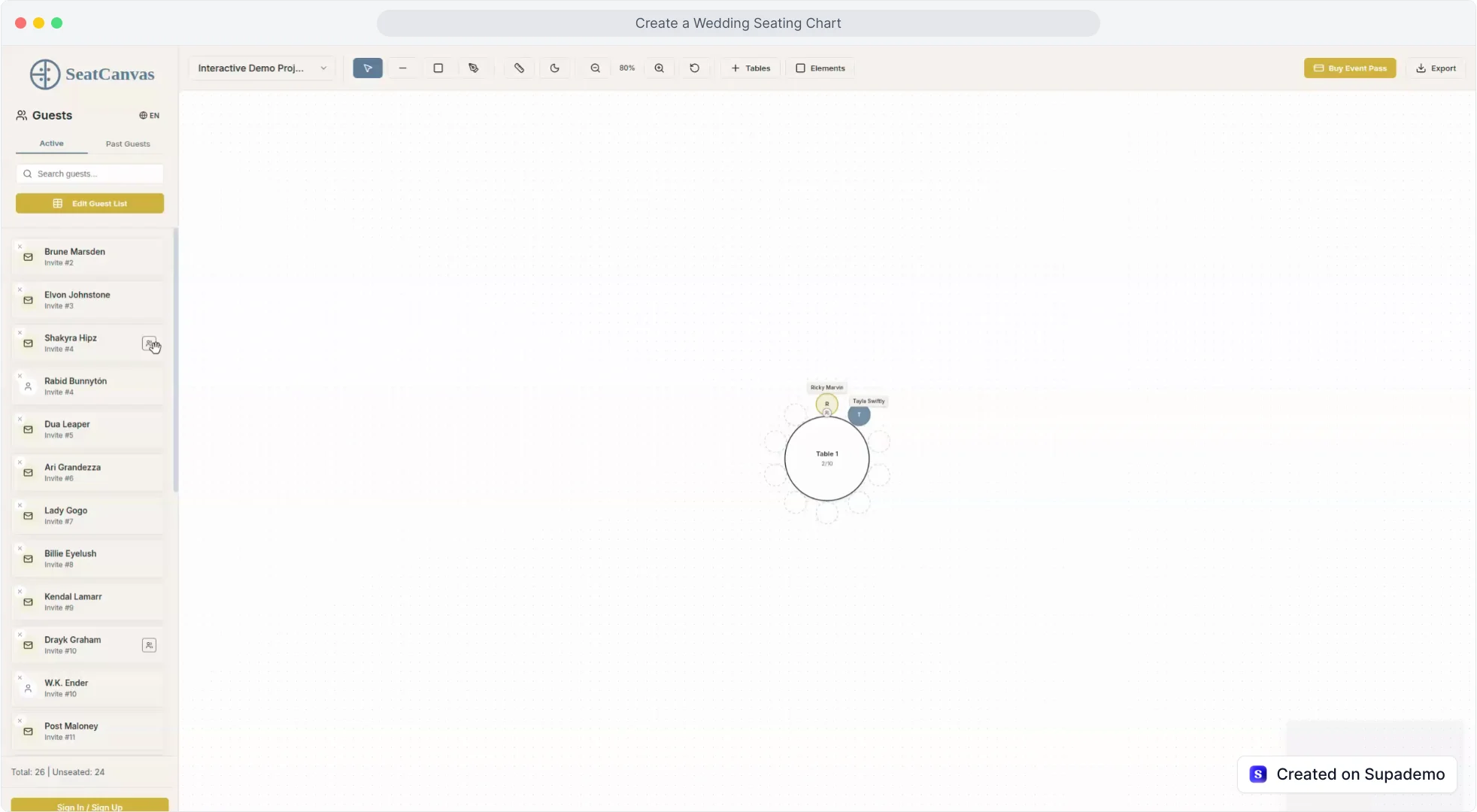
A visual drag-and-drop seating chart tool drops the cognitive load. Move people fast. See the room instantly. Adjust tables without redrawing the floor plan.
SeatCanvas has a dedicated free wedding seating chart maker built around exactly this workflow.
Stop wrestling logistics. Focus on guest comfort.
Final Thought
Your seating chart is not a final exam. It is a tool. If most guests feel relaxed, included, and able to enjoy dinner, you won.
Every wedding has an awkward table. It just doesn’t have to be yours.
✦ Google Preferred Source
Want to see more SeatCanvas stories on Google?
You can ask Google to show SeatCanvas more often in your own Top Stories and supported Google experiences. This personalizes your account; it does not raise SeatCanvas for everyone.
Google's control loads only after you choose Continue with Google.