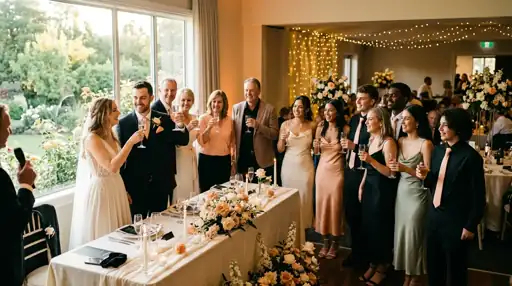
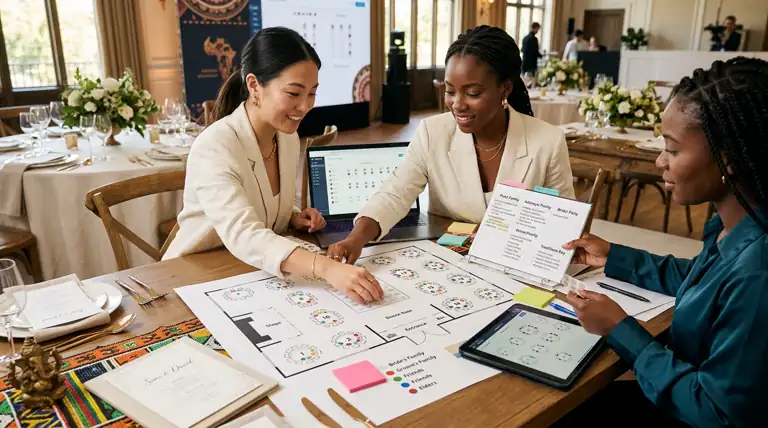
Most “best seating chart generator” roundups picture one family’s wedding. One guest list, one set of traditions, one grandmother everyone already knows where to seat. A multicultural wedding is two of all of that, joined for one night. Two families who have often never met, two ideas of who the honored guests are, sometimes two languages at the same table, and a room that has to read as one wedding instead of a his-side, her-side standoff.
The seating chart is where those two worlds actually touch. Not the ceremony, not the menu — the tables. Who sits next to whom is the most visible decision you make about how the two families are supposed to feel about each other, and every guest reads it the second they find their name.
Here is the honest version for couples and planners marrying two cultures together: what a two-family, two-tradition wedding really asks of a seating tool, how to merge guest lists that share no history, and which of the shiny features ranked in every roundup you can skip.
The short version: A multicultural wedding chart does three jobs a single-culture chart never does — merge two guest lists that have never met, honor two sets of etiquette about elders and place-of-honor seating, and bridge a possible language split without stranding anyone. You want a blank canvas you can color-code by side, language, or meal, not a stock template. SeatCanvas seats 40 free with full canvas, import, and export; past 40 it is $19.99 one-time. Mark both honored tables first, mix the two sides on purpose at the edges, put a bilingual bridge at every mixed table, then export a clean PDF both families and the caterer work from.
Why a multicultural wedding is a different chart
A single-culture wedding is a merge you already understand. You know both families, roughly, or at least you know the shape of them. The etiquette is one etiquette. A multicultural wedding hands you two of everything and asks you to make them fit in one room for one evening.
The constraints are social, not structural, and none of them show up on a venue diagram:
- Two guest lists with no shared history. One side is the couple’s home crowd; the other flew in, sometimes from another country. They have never met, and the chart is the first place they do. Seat them as two islands and the wedding feels like two parties in one room.
- Two sets of etiquette about honor. Many cultures reserve a specific seat for grandparents, godparents, or family elders — a place that signals respect. Both sides usually have one. Honor one and forget the other, and a whole family notices.
- A possible language split. In a lot of multicultural weddings, part of the room speaks one language comfortably and part speaks another. A guest seated at a table where nobody shares their language spends dinner smiling politely and checking their phone.
- Two dinner customs and a mixed dietary map. One tradition serves family-style, one plated; one side has a table of vegetarians, the other needs halal or kosher meals flagged. The chart is where the caterer learns which table gets what.
None of that is a reason to simplify the wedding down to one side’s rules. The two cultures are the whole point. It is the reason the chart has to do more diplomatic work than a single-family plan — the room is a first meeting between two families, and the seating plan is the introduction.
What a multicultural wedding needs from a seating tool
Try SeatCanvas — Free
Build your seating chart visually. Import guests, drag to tables, export a print-ready PDF.
Start Planning Free →Feature-count rankings miss the point here. A two-family, two-tradition wedding rewards a short, specific set of capabilities and ignores most of the marketing checklist.
A blank canvas you can shape around the people
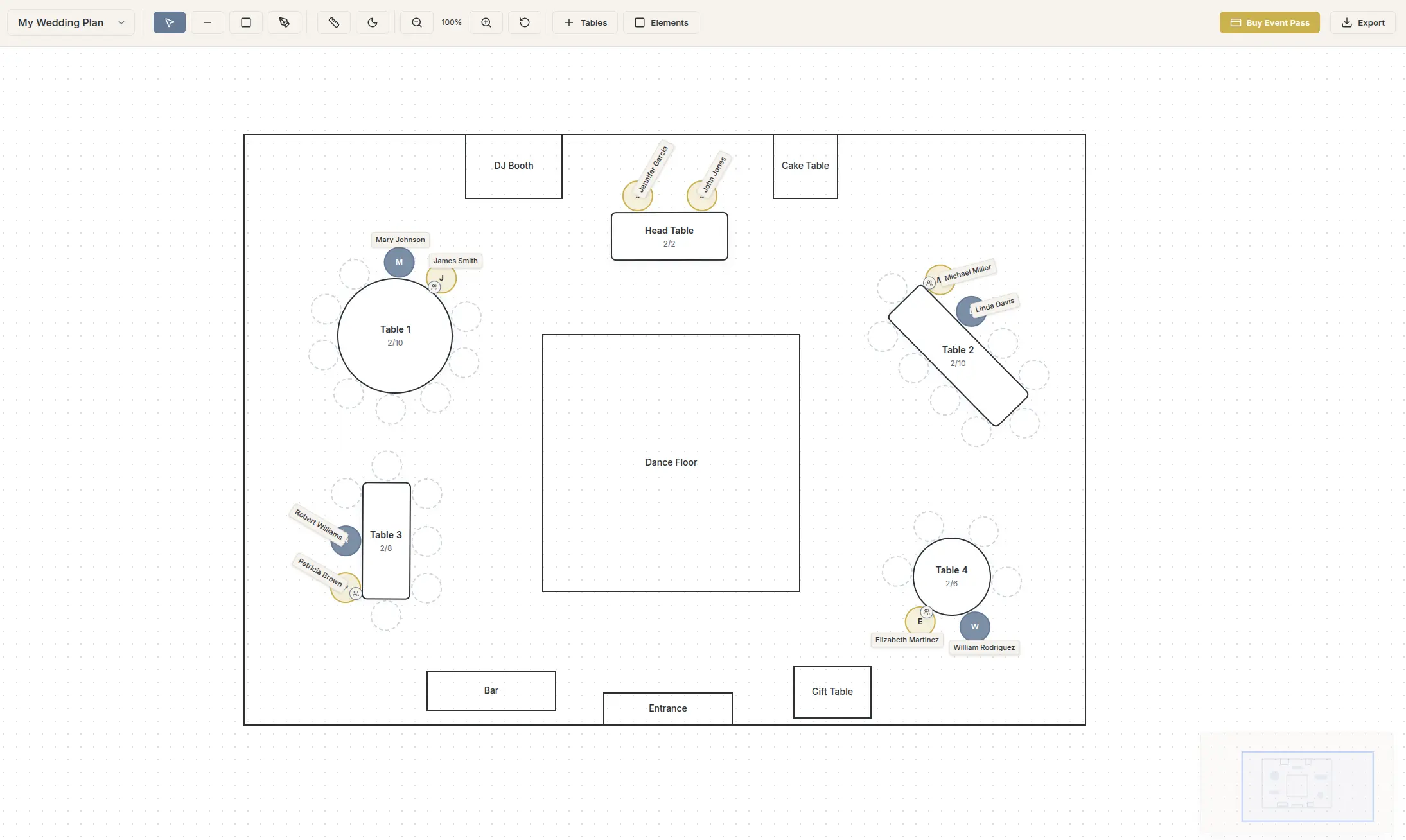
This is the one that matters most. Template-driven generators drop you into a pre-drawn room with tables already numbered, which quietly assumes one guest list flowing into one grid. A multicultural wedding is not that. You are arranging two families in relation to each other, and where the honored tables and the mixed tables sit is the entire job.
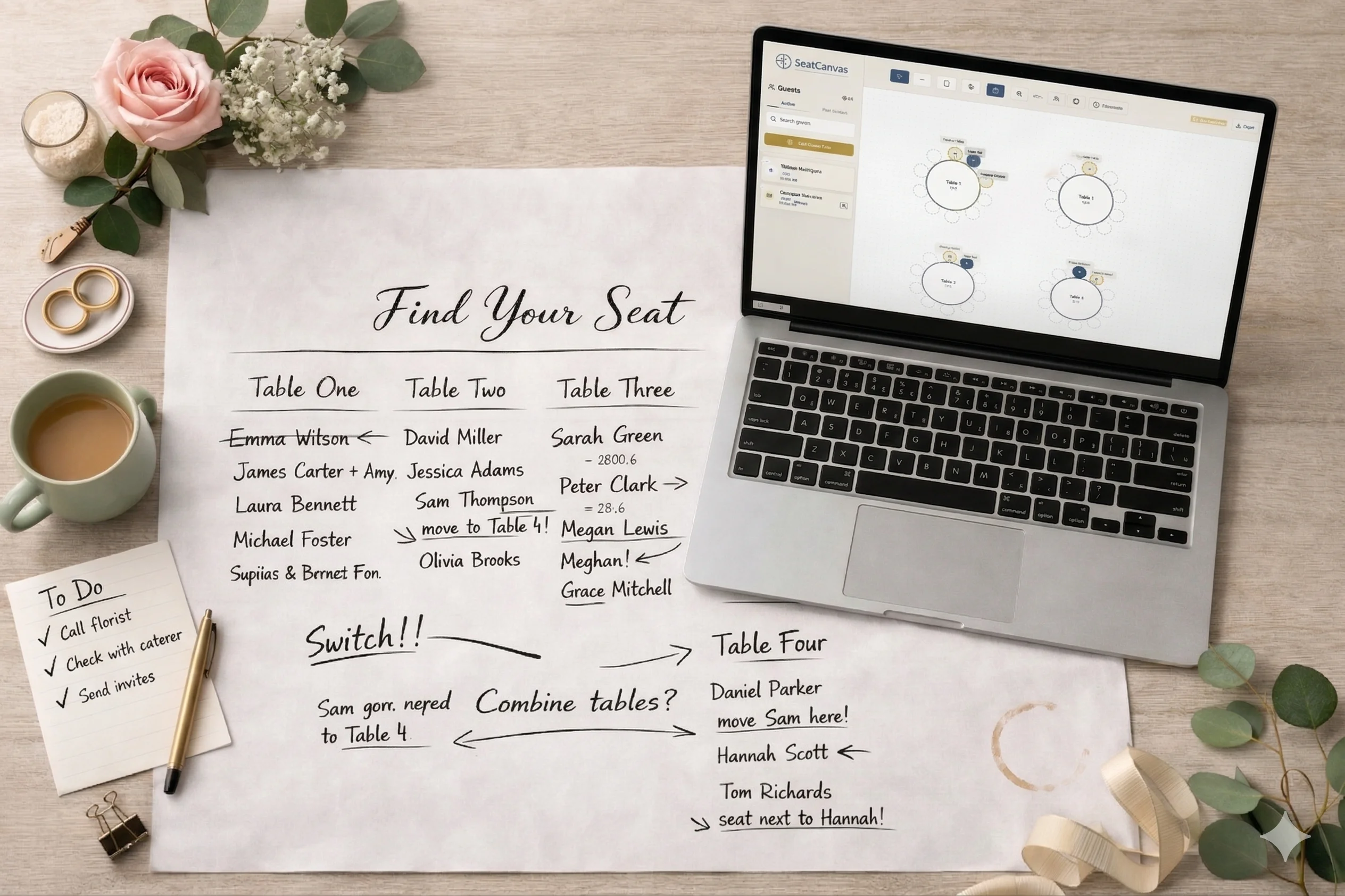
You want a tool that opens to an empty canvas and lets you build the real room and the real relationships. SeatCanvas is a free, browser-based seating chart generator for weddings and events, and it opens blank. You draw the venue you actually have, place both honored tables near the couple first, then lay out the rest so the two sides meet in the middle instead of facing off across an aisle. The layout is a map of how you want the families to mix, not a template’s guess at a generic reception.
Color-coding that carries three meanings at once
A single-culture chart color-codes by meal, maybe. A multicultural chart often needs to see three overlays: which side a guest is from, which language they speak, and which meal they get. Those three maps rarely line up, and the tension between them is the actual planning problem.
You need a tool where you can tag and re-tag tables and scan the room fast. On a visual drag-and-drop canvas you can color one side warm and one side cool and literally watch where the two meet, then re-check the same layout for language bridges and meal counts. The point is not decoration. It is catching the table where five guests share no common language, or the honored-elders table that accidentally ended up in a corner, before the day instead of during it.
Import that merges two guest lists
Multicultural weddings run big. Two extended families, plus friends from both worlds, plus the travel contingent — the list climbs fast, and it usually starts life as two separate spreadsheets kept by two different sides. Retyping 180 names by hand, twice, is a bad way to spend a week.
If each side keeps its RSVPs in a sheet, the tool should take both. SeatCanvas has a CSV and Excel guest list import that maps your columns and pulls plus-ones in as their own seats. Import one side, import the other, tag each as you go, and the two lists become one guest pool you can actually arrange — in minutes, not evenings.
One export both families and the caterer work from
A two-family wedding has more people who need the plan. Both sets of parents want to see where their relatives landed. The caterer needs meal counts by table across two dietary maps. The day-of coordinator needs a diagram to point 160 people at chairs, some of whom are reading the room in a second language.
That is several handoffs off one file. SeatCanvas does high-quality PDF and PNG export plus a CSV of the guest-to-table mapping. One clean plan to each family for a sanity check, one to the caterer with the meal flags, one printed for the welcome table. No retyping between them, and no watermark on the version anyone works from.
The shortlist for multicultural weddings
Honest reads on the names that come up, judged against the two-family, two-tradition problems above.
| Tool | Best for a multicultural wedding | Price | Color-codes two sides at once? |
|---|---|---|---|
| SeatCanvas | Merging two guest lists and seeing side, language, and meal on one canvas | Free to 40 seated guests, then $19.99 one-time | Yes — tag by side, language, or meal and scan the room |
| Pen and paper | A 30-guest wedding where both families already know each other | Free | By hand, and every RSVP change is a redraw |
| The Knot, Zola, WeddingWire | Couples already living inside the platform | Free with the account | Basic tags, template rooms, not built for a two-list merge |
| Subscription seating sites | Nothing about a one-day wedding | Recurring monthly | Varies — but the billing shape is wrong |
SeatCanvas
Best for: any wedding joining two families who do not already know each other, where you want to see which side, which language, and which meal each table holds, and hand the same file to both families and the caterer.
Free up to 40 seated guests with the full canvas, import, and export. $19.99 one-time for unlimited, which covers the 150-to-200-guest weddings two big families tend to produce. It runs in English and Spanish, which helps when one side of the planning team is more comfortable in Spanish. No subscription, no watermark on the PDF anyone builds from.
The honest limitation: SeatCanvas maps who sits where, not the etiquette of your specific traditions. It will not tell you which grandparent outranks which at the honored table, or how your two families rank godparents — that is a conversation with your parents, not a setting in an app. What it gives you is the canvas to act on the answer once you have it, and to see the whole merge in one view.
Pen and paper
Best for: a 30-guest wedding where both families already know each other and the language and meals are all one.
Free and quick for a tiny, familiar group. It falls apart the moment you are merging two lists and re-checking three overlays. Sketching two families onto graph paper, then re-drawing when a table of eight flips languages, turns the plan into an eraser smudge. Past a couple of tables in a real two-family merge, paper loses to a canvas you can drag and recolor.
The Knot, Zola, WeddingWire seating tools
Best for: couples already living inside one of these platforms with months of runway.
The seating modules are real, and the tagging is fine for a single-list wedding. They assume one guest list flowing into a template room, though, not two lists you are deliberately weaving together with a language map on top. If you are not already inside one of these suites, do not adopt an entire planning ecosystem just for the chart. The Knot seating chart breakdown covers the trade-offs. WeddingWire’s chart adds a second catch — guests must be entered in its marketplace first, exactly the double-entry a two-list wedding does not need; the WeddingWire seating chart comparison has the details.
Subscription seating sites
Best for: nothing about a one-day wedding.
A recurring monthly bill for a chart you build once is the wrong shape. The wedding is one day. The chart is one project. Pay once or pay nothing — a charge that lands the month after the thank-you cards is a poor fit for an event with a hard end date.
The multicultural-wedding playbook
This assumes a guest list in a sheet or two and a venue you can picture. Work it in one focused sitting once both sides’ RSVPs are mostly in.
Mark both honored tables first. Before anything else fills in, place the two honored tables — elders, grandparents, godparents, whoever each culture seats in the place of respect — near the head or sweetheart table. Put them at matching distance and matching prominence. This one move sets the tone: both families read as equals in the room, and everything else arranges around that fixed point.
Import both guest lists and tag by side. Go to the SeatCanvas planner. Drop each family’s CSV or XLSX, map the columns, and tag every guest with their side as it comes in. Plus-ones come through as their own seats. Two 90-row sheets become one 180-person pool you can actually see, and the tags do the sorting work the rest of the night depends on.
Color the room by side and find the seams. Color one side warm, one side cool. Look at the whole canvas. You want each side anchored near its own core, then the two colors meeting across the middle tables — not a hard split down a center aisle. A 60-inch round seats about 8 and a 72-inch round about 10, so a 180-guest merge is roughly 20 to 23 tables to balance — enough that eyeballing it on paper stops working fast. The tables where the colors mix are your bridge tables, and they are where the wedding actually becomes one wedding.
Add the language overlay. Re-check the same layout for language. Group guests who share a language so nobody sits through dinner unable to talk, then seat a bilingual family member or friend at each mixed table to carry the conversation across the line. If a table has five guests and no shared language and no bridge, fix it now. The bilingual wedding seating guide goes deeper on this exact split.
Assign the rest and check the meals. Family first on both sides, closest tables. Then friend clusters. Then the plus-ones who know no one — seat them next to a talker, not next to each other. As you go, flag the dietary and meal customs: the vegetarian table, the halal or kosher meals, the family-style versus plated sections. Color-code the meals so the caterer gets one unambiguous map.
Export everything. PDF to each family for a sanity check, so both sides see their relatives landed with care. CSV to the caterer for meal counts across both dietary maps. A printed copy for the welcome table. Save the project so you can reshuffle when the last RSVPs land.
A general step-by-step lives in how to create a wedding seating chart, and if your two families are also two families becoming one through remarriage, the blended families table planner covers that overlap.
The two-families-meeting problem nobody warns you about
Every multicultural wedding runs into the same quiet issue: the instinct is to seat each side with its own, and that instinct builds two weddings in one room. His family on the left, her family on the right, a polite aisle of strangers down the middle, and a reception where the two halves never actually meet. The photos look like two events that happened to share a caterer.
The fix lives in the chart, not on the day.
Anchor each side, then mix at the edges. Nobody wants to sit at a table of strangers, so give each side a core of its own people. But leave the tables in between deliberately mixed — a few guests from each side who are easy talkers or who already know someone across the aisle. Those bridge tables are where the two families start to feel like one.
Seat the bridges, do not leave them to chance. The cousin who studied abroad, the aunt who charms everyone, the friend who knows both sides from the couple’s own history — these people are the seams. Put them on purpose at the mixed tables. A good bridge guest turns a table of two strangers-families into the loudest, warmest table in the room.
Check the honored tables read as equal. Before you lock the layout, look at the two honored tables side by side. Same distance from the couple, same prominence, same care. If one grandmother is front and center and the other is half-behind a pillar, move the table. This is a two-minute pass on the canvas and an unfixable regret in the family group photo.
The two families meeting is the whole reason a multicultural wedding is beautiful. Build the mixing into the chart early and the room becomes one celebration. Leave it to instinct and you get two receptions sharing a dance floor.
What to skip for a multicultural wedding
Three temptations, all dressed up as thoroughness.
A separate chart for every tradition. Two ceremonies do not always mean two seating charts. If the tea ceremony or the religious rite is standing-room or family-only, it does not need a full assigned plan — put the effort into the dinner, where both full families sit down together and the mixing actually happens.
Translating the whole chart into both languages. The place cards and any signage, sure. The working seating plan is for you, the planner, and the caterer — it does not need a bilingual rebuild. Color-coding by language does the job the translation would, and it does it at a glance. SeatCanvas running in English and Spanish already covers the planning side if Spanish is one of your two languages.
Perfect cultural symmetry at every table. You do not need exactly half of each side at every single table. Some tables will lean one way, and that is fine — a table of the groom’s college friends does not need a diplomatic quota. Save the deliberate mixing for the bridge tables and the shared-family zones. Forcing a 50-50 split everywhere makes for stilted tables where nobody knows anybody.
The multicultural seating chart is two guest lists merged with intention, two honored tables treated as equals, and a printed plan both families and the caterer trust. Everything past that is ceremony pretending to be planning.
Common questions
What is the best seating chart generator for a multicultural wedding?
SeatCanvas. A multicultural wedding merges two family cultures, two guest lists that have never met, and two sets of etiquette about who sits where, so you want a blank canvas you can shape around those people, not a stock template. You can draw the real room, color-code tables by side, language, or meal, and see the whole merge at once. The free tier seats 40 guests with full canvas, CSV import, and PDF and PNG export. Past 40 the Event Pass is $19.99 one-time.
How do you seat two families who have never met at a multicultural wedding?
Mix them on purpose at the edges, not everywhere at once. Seat each side near its own core of family and close friends so nobody feels stranded, then bridge the two lists at the tables in between with guests who are easy talkers or who know people on both sides. A visual chart lets you color each side one color and watch the two colors meet in the middle of the room instead of splitting it down a center aisle.
How do you handle a language split in a multicultural wedding seating chart?
Seat guests near at least one person they can talk to, then bridge the tables with bilingual guests. Group guests who share a language so no one sits through dinner unable to join the table, and place a bilingual family member or friend at each mixed table to carry the conversation across the line. Color-code the chart by language so you can see at a glance which tables have a bridge and which leave someone stranded.
How do you seat honored elders from two different cultures?
Give both sides a place of honor near the couple, and make them match. Many cultures seat grandparents and elders at a spot that signals respect, usually closest to the head or sweetheart table. If you honor one side and not the other, the photos remember it. Mark both honored tables on the chart first, before anything else fills in, so the two families read as equals in the room.
How many guests does a multicultural wedding usually seat?
It varies, but two big extended families plus friends from both worlds often lands in the 150-to-200 range for a seated dinner, which is why the format tends to outgrow a free-tier cap fast. The honest way to know your number is to import both lists, place your tables, and count — a 60-inch round seats about 8, so the table count follows directly from the merged guest pool once both sides have replied.
A multicultural wedding is the warmest seating job and one of the most delicate. Two families, two sets of customs, sometimes two languages, all meeting for the first time over dinner. Pick a tool that lets you merge both lists, see side and language and meal in one view, treat both honored tables as equals, and hand a clean PDF to both families and the caterer — and the room becomes one wedding instead of two.
If you want to see how the merge comes together, open SeatCanvas and build your two-family plan. The first 40 seats are free. If your wedding runs bigger — and two full families usually do — the Event Pass is $19.99 one-time, and both sides work from the same plan.
✦ Google Preferred Source
Want to see more SeatCanvas stories on Google?
You can ask Google to show SeatCanvas more often in your own Top Stories and supported Google experiences. This personalizes your account; it does not raise SeatCanvas for everyone.
Google's control loads only after you choose Continue with Google.