Most “best seating chart generator” roundups assume one language in the room. They picture a guest list where every name reads the same way to everyone, escort cards nobody has to puzzle over, and a chart the whole party can scan. A bilingual wedding is not that. One side of the family speaks Spanish, the other English, a chunk of the room moves between both, and a few grandparents speak only one. The seating chart has a second job nobody warns you about.
That job is conversation. At a one-language wedding, seating is a social puzzle — who gets along, who needs distance, who will dance. At a bilingual wedding, it is a social puzzle and a communication map. Put the wrong people together and you do not just risk a dull table. You risk a grandmother sitting through dinner in silence because the conversation switched to a language she does not speak.
Here is the honest version for couples and planners pulling two languages into one reception: what a bilingual wedding actually demands from a seating tool, how to seat for conversation instead of just affinity, and why the chart and the signage have to speak both languages too.
The short version: A bilingual wedding seats for conversation across a language line, not just for who likes whom. You want a tool you keep full manual control of — seating two languages is a judgment call, not something to automate — and ideally one both sides of the family can actually read. SeatCanvas runs in English and Spanish, imports a mixed-language guest list with accents and the ñ intact, and exports a clean PDF and PNG you build bilingual signage from. Free up to 40 seated guests, then $9.99 one-time for unlimited. Anchor every table with a bilingual guest, keep monolingual elders near family who can translate, and print the chart in both languages.
Why a bilingual wedding seats differently
A single-language wedding lets you seat on instinct. College friends here, work friends there, the cousins who always cause trouble kept apart. Language never enters the math because everyone shares one.
Two languages change the rules at the table level:
- Conversation has a prerequisite now. A table only works if the people at it can talk to each other. Six guests who do not share a language are not a table — they are six people eating near each other in silence.
- Monolingual elders are the high-stakes seats. The abuela who speaks only Spanish, the great-uncle who speaks only English. Strand either one and they spend your wedding lonely in a crowd. These are the seats you place first, not last.
- The two sides barely know each other. A bilingual wedding is often two families meeting for real on the day. The chart is the introduction. Seat them as two separate camps and they leave as two separate camps.
- The paper has to speak both languages. The escort cards, the table chart, the signage — if any of it reads in one language only, half the room is squinting at it.
None of that is a reason to dread the planning. A bilingual wedding is one of the warmest there is — two cultures, two families, one party. It just asks more of the seating chart than a one-language wedding does, and the tool you pick should make that easier instead of pretending the language line is not there.
What a bilingual wedding needs from a seating tool
Try SeatCanvas — Free
Build your seating chart visually. Import guests, drag to tables, export a print-ready PDF.
Start Planning Free →Feature-count rankings miss the point here. The bilingual format rewards a short, specific list of capabilities and ignores most of the rest.
A tool both families can actually read
Start with the obvious thing nobody lists. If the bride’s side works in English and the groom’s side works in Spanish, a planning tool that only speaks one of them quietly cuts half the family out of the build. The mother of the groom who wants to weigh in on where her sisters sit should not need a translator to use the app.
SeatCanvas runs in both English and Spanish. The interface, the menus, the buttons — both sides of a bilingual family can open the same chart and work it in the language they think in. For a wedding where the planning is genuinely shared across two languages, that is not a small thing. It means the person who knows the Spanish-speaking guests best can place them herself instead of dictating names to someone else.
Manual control, not an algorithm
Some seating tools sell auto-arrangement — feed it the list, let it generate tables. For a bilingual wedding, that is exactly wrong. No algorithm knows that Tía Carmen speaks only Spanish, that your roommate took two years of it and can hold a table together, or that your dad’s business partner is fluent and happy to bridge. Those are the facts the whole seating turns on, and they live in your head, not in a spreadsheet column.
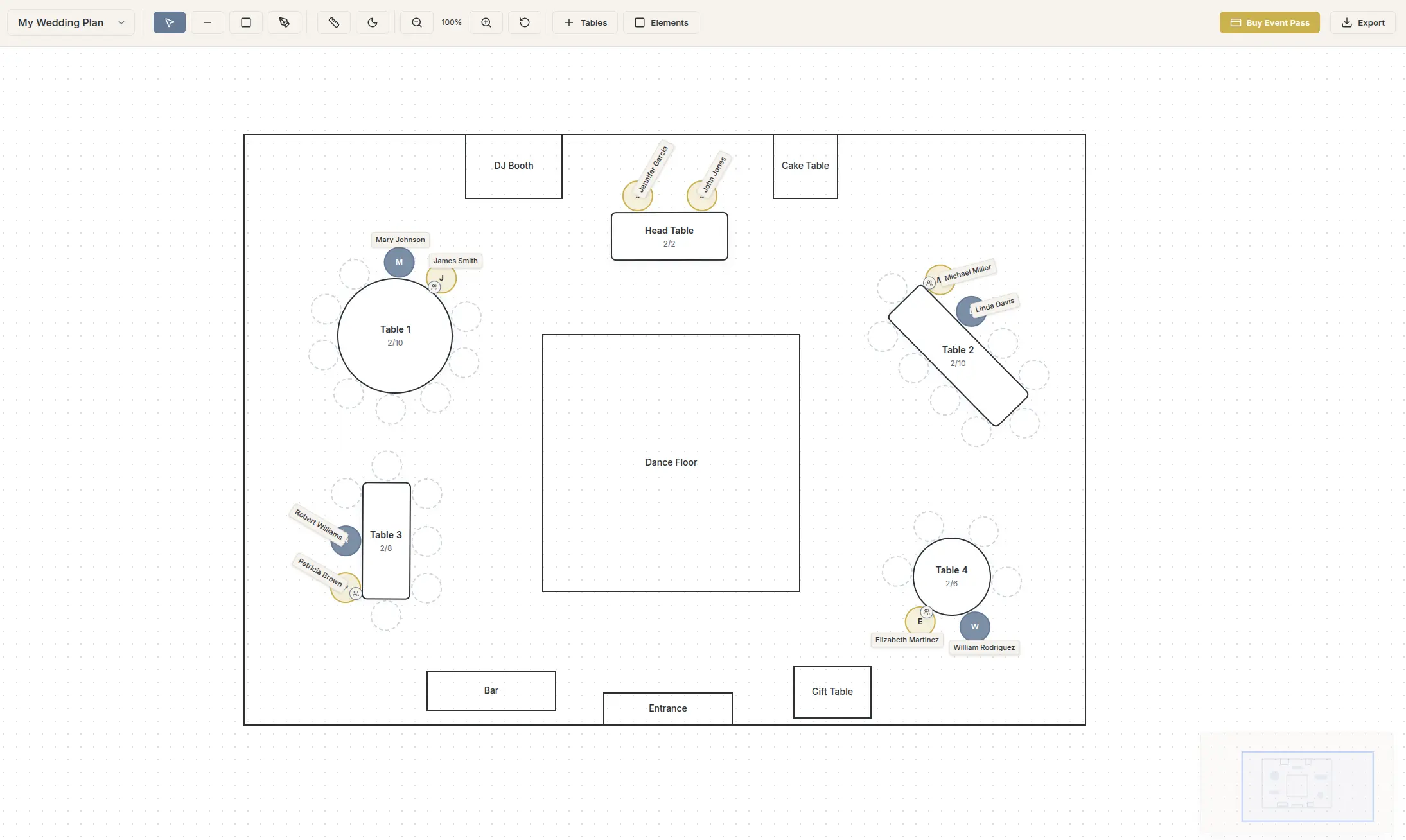
You want a tool that gives you a blank canvas and full manual control of every seat. Drag a guest, move them, change your mind. SeatCanvas opens to an empty canvas and lets you place every person by hand, because the language judgment is yours to make. The tool’s job is to make the dragging fast and the chart legible — not to guess at a problem it cannot see.
Import that respects the names
Half a bilingual guest list comes with accents and the ñ: María, José, Núñez, Peña, Muñoz. A tool that imports those as Mar?a or Pena has already failed the first test, because a misspelled name on an escort card at a bilingual wedding is the thing that table notices before the food arrives.
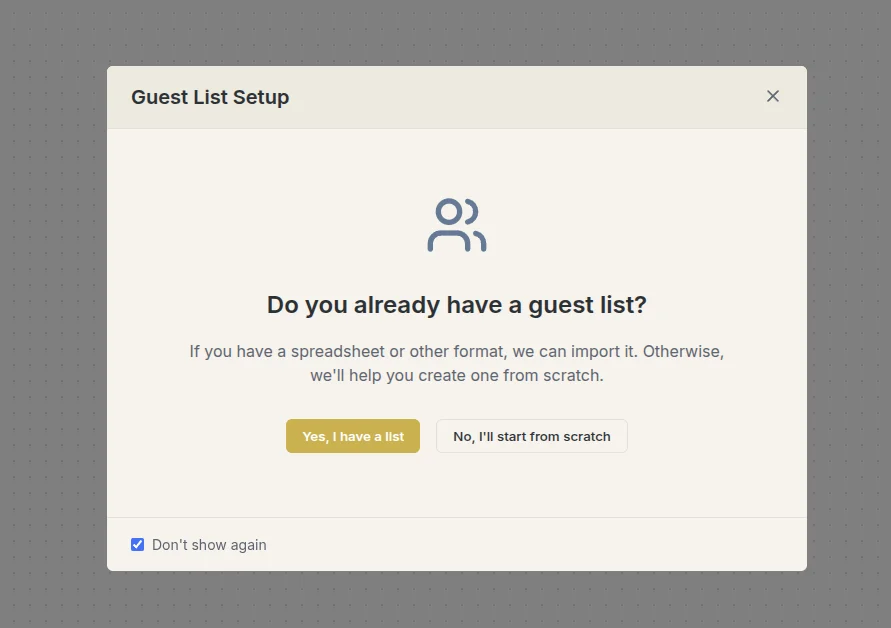
If your RSVPs live in a Google Sheet or an Excel file, the tool should take it whole and keep the spelling. SeatCanvas has a CSV and Excel guest list import that reads accented names as written and pulls plus-ones in as their own seats. You map your columns once, and a mixed-language list of 120 guests lands in a couple of minutes with María still spelled María.
An export both sides and the vendors read
The chart does not stay on a screen. The caterer needs meal counts by table. The day-of coordinator needs a diagram to point with. The welcome table needs a printed chart guests can find their names on — in both languages.
That is several handoffs, and they all run on a clean export. SeatCanvas does high-quality PDF and PNG export plus a CSV of the guest-to-table mapping. You build the bilingual printed chart from the PDF, hand the CSV to the caterer, and keep the live version on a phone for the coordinator who will get asked “¿en qué mesa estoy?” at least twenty times.
How to seat two languages: the playbook
This assumes a guest list in a sheet and a known venue. Work it in one focused sitting. The order matters more here than at a one-language wedding, because the hardest seats get harder the longer you wait.
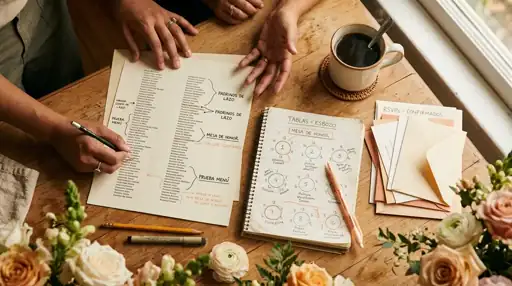
Tag who speaks what first. Before you place anyone, go down the list and mark three groups: Spanish-only, English-only, and bilingual. You probably know most of it by heart. The bilingual guests are your most valuable seating asset — they are the bridges every mixed table needs.
Place the monolingual elders before anyone else. The grandparents and great-aunts who speak one language are the seats with the least give. Put each one at a table where at least one or two people share their language and a family member can sit close. These placements anchor everything else, so make them first while the whole canvas is still open.
Open the canvas and build the room. Go to the SeatCanvas planner. Draw your venue, drop round and rectangular tables where the real ones go, and leave real aisles between them. Rounds are friendlier than long banquet tables for mixed-language conversation, because everyone can see and hear everyone.
Import the guest list. Drop your CSV or XLSX, map the columns, confirm the accented names came through clean. Plus-ones arrive as their own seats. Spot-check a few names with ñ before you move on.
Anchor every table with a bilingual guest. This is the rule that makes the night work. Every table that mixes the two sides needs at least one person who can move between both languages and keep the conversation from stalling. Seat your bilingual cousins and friends as the connective tissue, one or two per mixed table, then fill the rest around them.
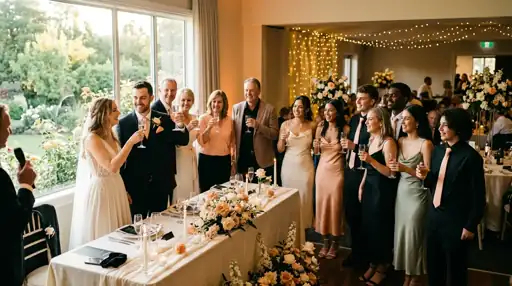
Mix the sides where you safely can. A bilingual wedding is the two families meeting. Seat the cousins who share enough of both languages together. Put the fluent uncle next to the in-law he has never met. Cluster by language only where you have to — for the elders — and mix everywhere people can actually talk.
Export and build the signage in both languages. PDF for the printed chart, CSV for the caterer, PNG for the welcome sign. Make the printed chart and the escort cards read in both languages, number the tables the same way in each, and keep the digital copy on a phone for the day-of questions.
A general step-by-step lives in how to create a wedding seating chart, and if your bilingual wedding leans on one culture’s traditions, the Mexican wedding seating guide covers the family-table dynamics in more depth.
The signage problem nobody plans for
You can build a flawless bilingual seating chart and still lose the room at the door if the signage speaks one language. A guest walks up to the welcome table, scans a chart printed only in English, and the half of the family that reads Spanish is now stuck asking a cousin where they sit.
The fix is small and worth the hour.
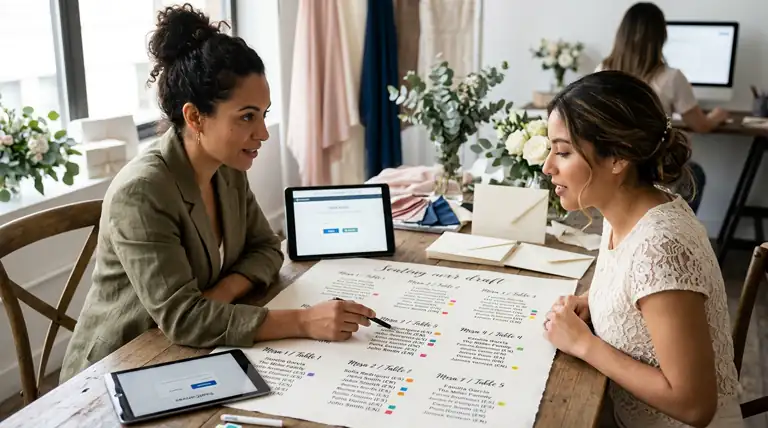
The master chart, twice. Print the seating chart with headers in both languages — “Find your seat” and “Encuentra tu lugar,” “Table” and “Mesa.” The names stay the same; only the labels double up. One clean PDF export from SeatCanvas gives you the layout to build both versions from.
Escort cards that do not assume. If the card carries any instruction beyond the name and table number, put it in both languages. A card that says only “Table 7 / Mesa 7” already works for everyone.
Number tables identically. Do not call it Table 7 in English and Mesa Siete in spelled-out Spanish on the other sign. Use the same numeral in both so a guest comparing the chart to the table marker never doubts they are in the right place.
The chart is a living thing until the toasts start. At a bilingual wedding, it is a living thing that has to make sense to two languages at once. Plan the signage for both and nobody stands lost at the door.
What to skip for a bilingual wedding
Three temptations, all dressed up as thoroughness.
A hard language line down the middle of the room. It is the easy call and it wrecks the wedding. Splitting English left, Spanish right gives you two parties that never meet, which is the opposite of why two families threw one wedding. Mix at the tables and bridge with bilingual anchors instead.
Translating every guest’s name. José is José in both languages. So is Sarah. You are spelling names correctly, not translating them — skip the urge to “Spanish-ify” or “Anglicize” anyone. The import already keeps the spelling right; leave the names alone.
A seating algorithm that promises to solve it. No auto-arranger knows who speaks what. The whole bilingual seating problem lives in facts only you have, so a tool that offers to generate the chart for you is offering to get the one thing that matters wrong. Keep the manual control and place the elders yourself.
A bilingual seating chart is a conversation map, a set of bilingual anchors, and signage that reads in both languages. Everything past that is busywork.
Common questions
What is the best seating chart generator for a bilingual wedding?
SeatCanvas. The app interface runs in both English and Spanish, so the side of the family that reads English and the side that reads Spanish can both work the same chart. You keep full manual control of who sits where, which is what a bilingual wedding needs — seating is a conversation map, not a grid to automate. The free tier seats 40 guests with canvas, CSV import, and PDF, PNG, and CSV export. Past 40, the Event Pass is $9.99 one-time.
How do you seat guests at a bilingual wedding?
Seat for conversation, not just for who likes whom. Do not strand a grandparent who speaks only one language at a table where nobody else does. Anchor each table with at least one bilingual guest who can bridge, then build outward. Mix the two sides where people share a language, and keep monolingual elders near family who can translate. The goal is that nobody sits in silence because the table switched languages around them.
Should a bilingual wedding seat the two language groups separately?
Not entirely. Splitting the room into an English half and a Spanish half is the easy call and the wrong one — it turns one wedding into two parties that never meet. Mix at the tables where guests share enough of both languages to talk, and only cluster by language for elders who would otherwise be isolated. A few bilingual anchors per table do more for the night than a hard language line down the middle.
Does a bilingual wedding need seating signage in both languages?
Yes. The master chart, the table numbers, and the escort cards should read in both languages so no guest has to guess. Print the seating chart with bilingual headers, number the tables the same way in both, and keep the digital copy on a phone so a coordinator can answer a seating question in either language on the spot. SeatCanvas exports a clean PDF and PNG you build the printed signage from.
Can SeatCanvas import a guest list with Spanish names and accents?
Yes. The CSV and Excel import reads names with accents and the ñ as written, so María, Núñez, and José land in the chart spelled correctly instead of mangled. Map your columns once and plus-ones come through as their own seats. Getting names right is not a nicety at a bilingual wedding — a misspelled abuela on the escort card is the first thing her whole table notices.
A bilingual wedding is two families, two languages, one party — and the seating chart is where they actually meet. Seat for conversation, anchor every mixed table with someone who speaks both, place the monolingual elders first, and print the signage so both sides can read it. Get that right and the room stops being an English half and a Spanish half. It becomes a wedding.
If you want to see how it comes together, open SeatCanvas and start placing names — in English or in Spanish, whichever you think in. The first 40 seats are free. If your two families add up to more — and at a bilingual wedding they usually do — the Event Pass is $9.99 one-time, and the whole chart lives in one place both sides can read.